||
Share:



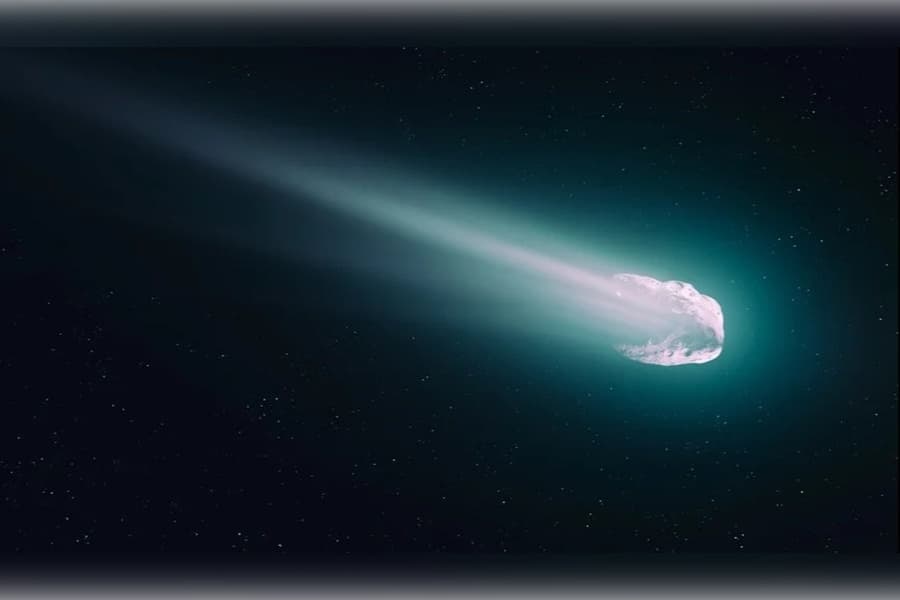
In February 2026, astronomy enthusiasts will be able to observe the close approach of Earth and the large comet C/2024 E1 (Vezhchosa) using telescopes. With an estimated brightness of about magnitude 8–9, the object will not be visible to the naked eye and will require specialized optical equipment for observation, according to Yuz.uz.
This icy giant, with a nucleus measuring between 2 and 10 kilometers in diameter, travels along an extremely elongated orbit. Astronomers believe that the comet’s current visit to our planetary system may be its last: after its encounter with the planets, it is likely to leave for interstellar space forever.
Peak visibility is expected on February 17, when the celestial body will pass at a minimum distance of one astronomical unit from Earth.
• In the Southern Hemisphere: observing conditions will be ideal, with the comet visible high above the horizon.
• In the Northern Hemisphere: the object will appear low above the southwestern horizon about an hour after sunset. Observation will be challenging, requiring an unobstructed horizon free from urban light pollution and the use of professional optical instruments.
On January 20, the comet successfully passed perihelion, approaching the Sun to within 85 million kilometers. It is now heading toward Earth, offering scientists and enthusiasts a rare opportunity to record a celestial object whose orbital period is measured in millions of years.
ORIENT
 Chinese New Year