||
(Part One here)
After the piercing cold of Astana, where the Third Regional Media Forum was held a few days before our flight to New Delhi, the weather in the Indian capital seemed like the blissful climate of the Garden of Eden. It was surprising – from the excruciatingly low temperatures immediately dropped to a comfortable 20 degrees Celsius.
Even the five-star Oberoi Hotel, where we checked in after a long journey with a grueling layover at Istanbul Airport, took on the appearance of Paradise in our clouded minds.

But thanks to a good rest, we regained our optimism and ability to perceive reality adequately. And this was very opportune, as the first place the Turkmen delegation visited as part of an international media group was…
Rashtrapati Bhavan – The Residence of the President of India
The grandeur of the presidential complex is immediately impressive, like much of what we've seen in India, where a distant history and modernity, visibly flowing into the future, clearly coexist in the same space.
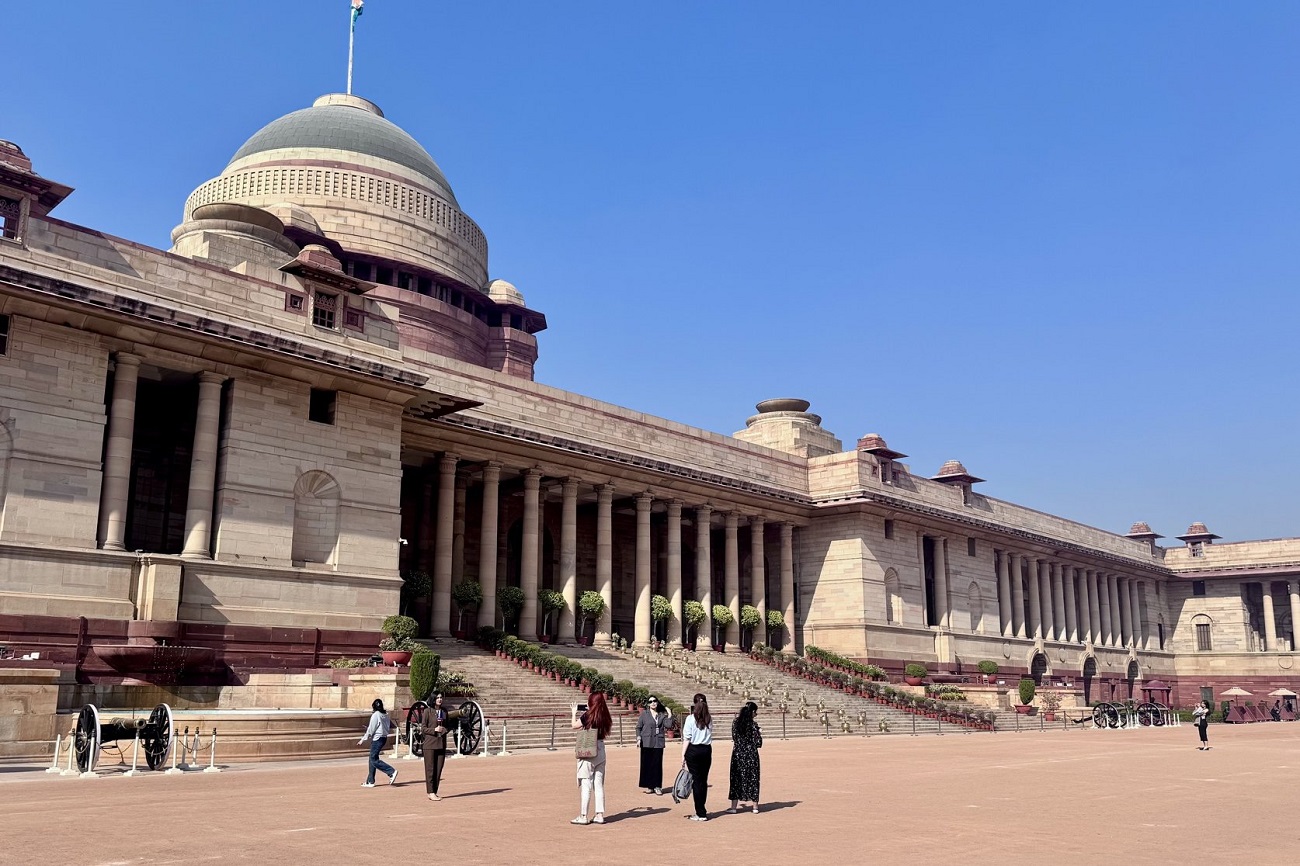
Rashtrapati Bhavan is said to be the largest presidential residence in the world. It strikingly combines elements of traditional Indian architecture and European urban planning. It is largely neoclassical, with its roots in Ancient Greece and Rome, with arches, columns, porticos, and the like characteristic of this style.
The presidential residence is located on Raisina Hill, which makes it even more grandiose. People near Rashtrapati Bhavan seem like Lilliputians, spun out of Jonathan Swift's imagination.
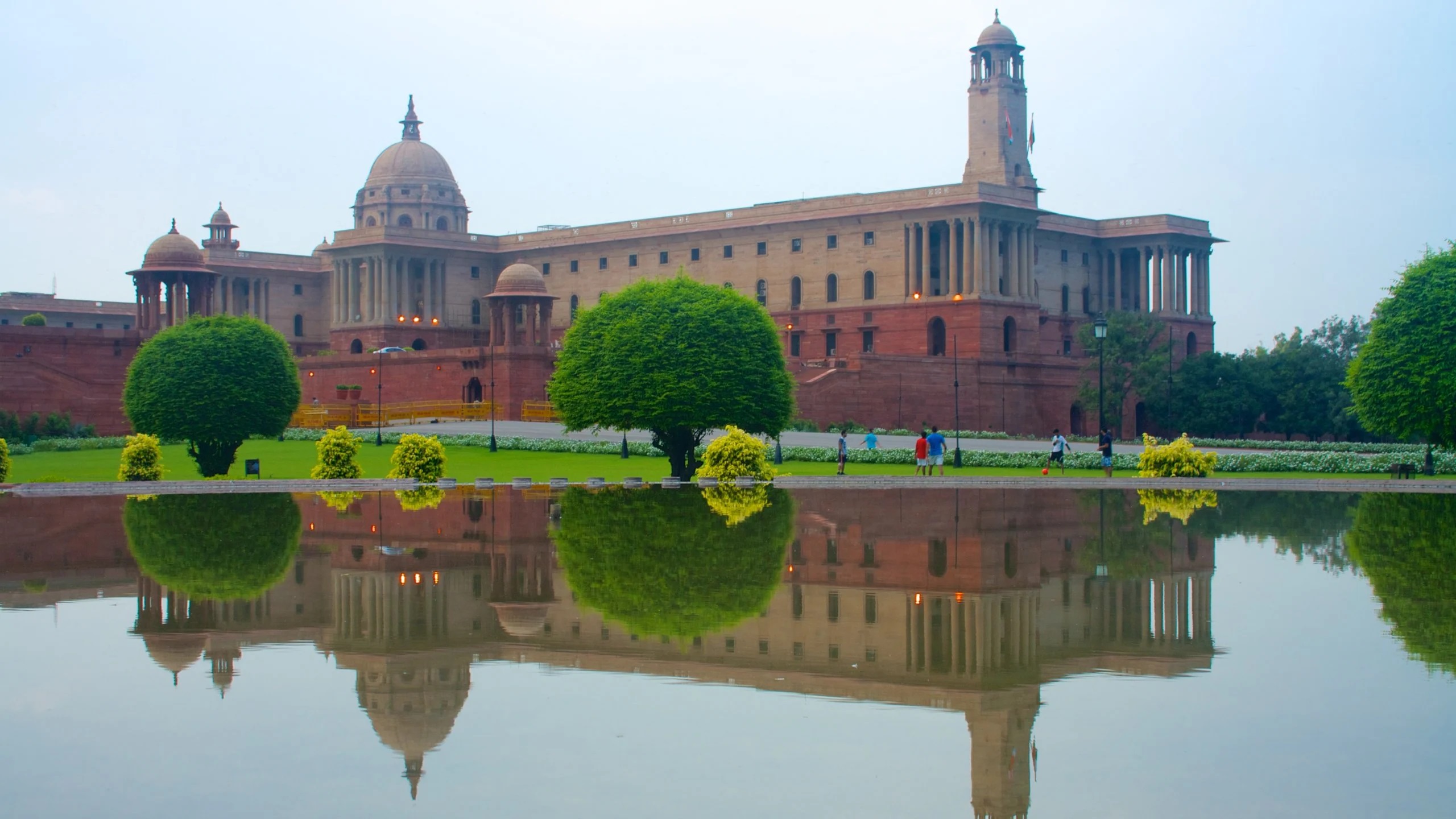
The main building of the complex alone contains 340 rooms, covering an area of approximately 19,000 square meters. Remnants of the Mughal dynasty (not to be confused with the Mongols!) have also been preserved here. These include the famous "Mughal Gardens," which were renamed the "Garden of Nectar" (Amrit Udyan) two or three years ago.
Our group never got to visit those fabulous gardens, which combine elements of Mughal and English landscape design. We were told they house collections of magnificent roses, tulips, lilies, and other marvelous plants. However, tourists are only allowed in during their blooming season, which lasts for just a few weeks in February and March.
In fact, the Mughal Empire, which lasted for approximately three and a half centuries—from the 16th to the 19th centuries—left a significant mark on the history of Indian civilization. This is evidenced by such architectural masterpieces as the Red Fort in Delhi, a World Heritage Site symbolizing Indian sovereignty, the Taj Mahal, the Jama Masjid, and many others. etc.
It was with the victory of the Mughals, who defeated the Delhi Sultanate, which at that time controlled the northern part of the Hindustan Peninsula, that the unification of almost all the principalities into a vast empire began, which defined the appearance of modern India.
...The creator of this architectural masterpiece was the British urban planner Edwin Lanches, who strove to create not just a vast complex, but, in his words, "a single, complete organism—perfect and indivisible," combining within it "grace and grandeur." And by all appearances, he succeeded completely.
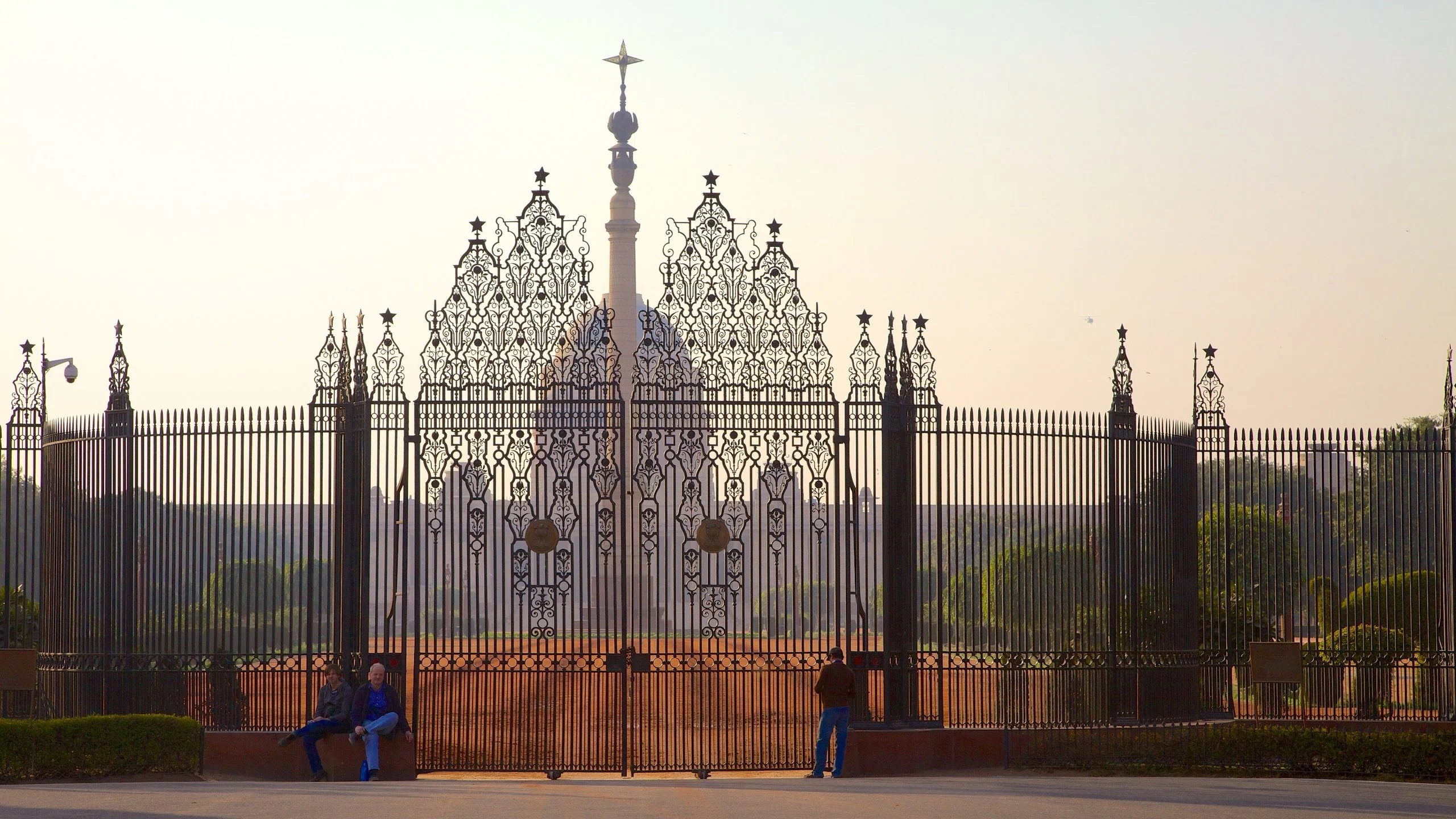
The building originally served as the residence of the British Viceroy. But after India gained independence in 1947, it became "Government House," and three years later, the residence of Rashtrapati Bhavan, which translates from Hindi as "President's House (or Palace)."
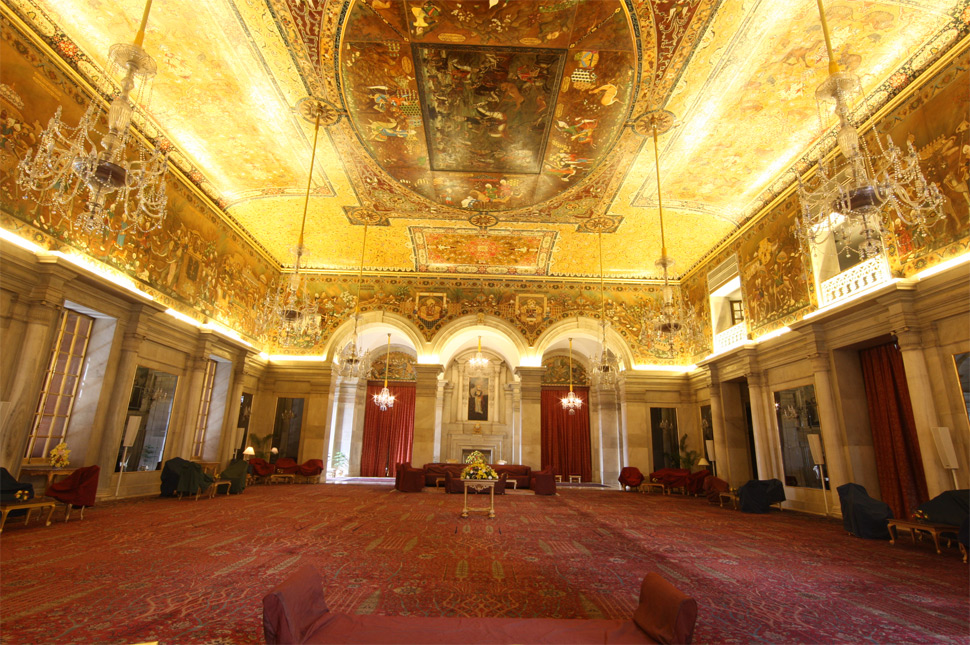
In three years, this grand complex will celebrate its 100th anniversary. It's likely to be celebrated in a grand and vibrant manner.
Indians love and know how to celebrate holidays, with their meaningful dances and captivating music, conducive to meditation, and colorful, glittering, and dazzling attire.
I wish I could come here at this time for such celebrations...
Here I'll interrupt the chronology of events and jump straight to the memory of how our group of journalists from Central Asia, Armenia, and Georgia left Delhi for Agra during a media tour. For one day, to accomplish...
An Introduction to the Taj Mahal – a Pearl of Love and History
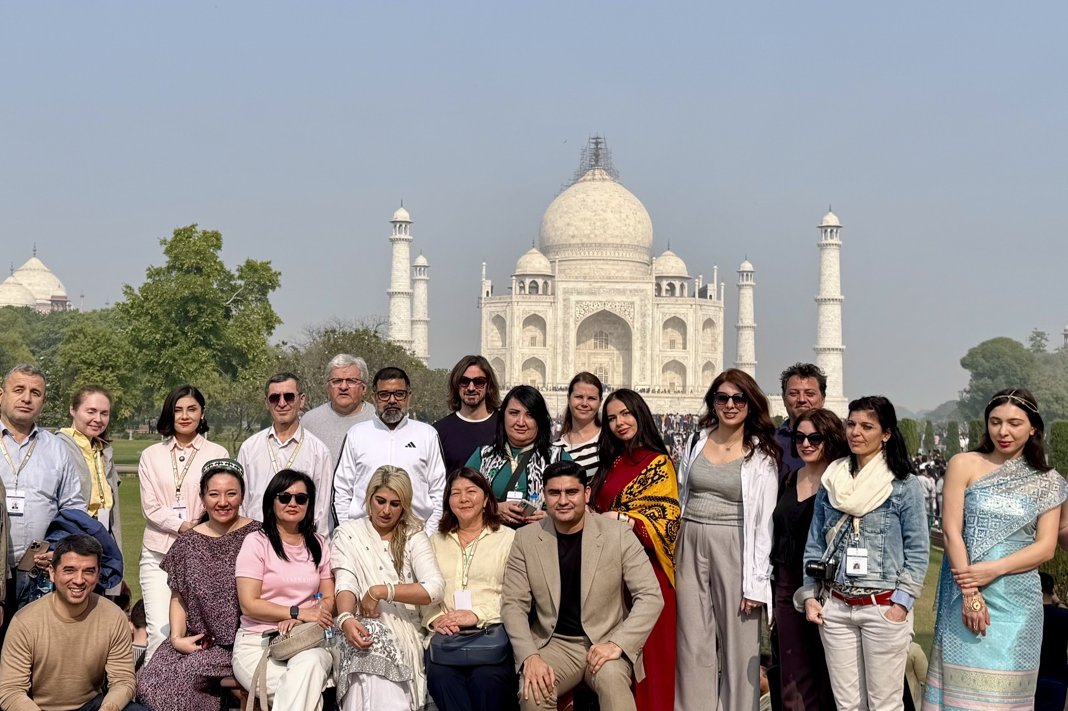
When you arrive in Agra, even from a distance you can sense the magic of the Taj Mahal – a majestic white marble mausoleum. But as you approach, the grandeur of this monumental building becomes even more impressive. I approached the Taj Mahal just as the white marble glowed softly, reflecting the rays of the midday sun.
This monument, built in the 17th century by Emperor Shah Jahan, is dedicated to his beloved wife. Legend has it that the emperor was so devoted to his wife's memory that he ordered the mausoleum to be built of white marble, adorned with precious stones, which reflects light differently depending on the time of day.
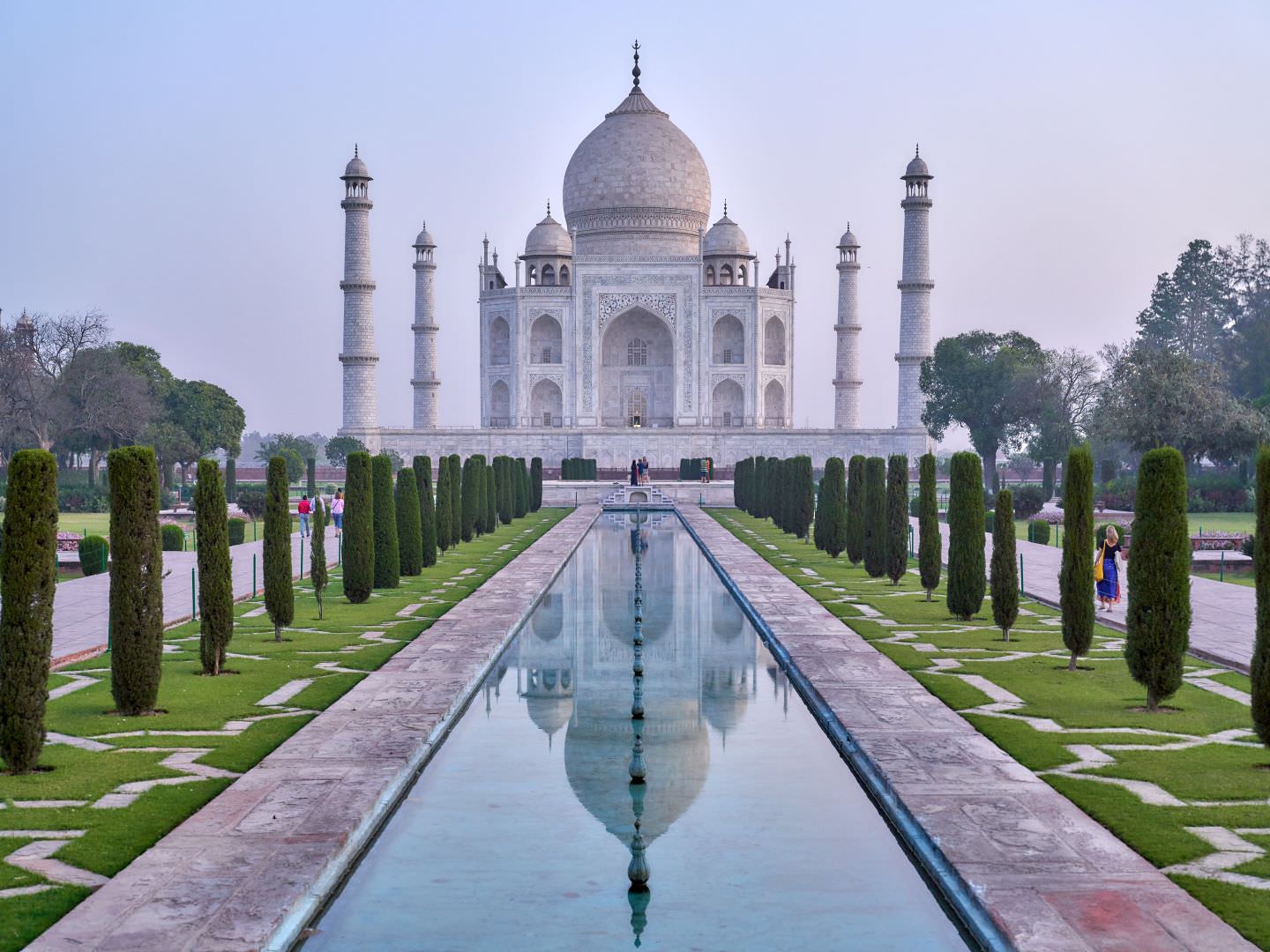
This is why the white marble changes color throughout the day – at dawn it turns pink, during the day it shines dazzlingly white, and in the moonlight, it turns silver. This play of light, according to the ineradicably spiritual locals, embodies the fickleness of human emotions and the eternity of love.
...I saw the enormous dome, rising majestically above the smooth surface of the pond, reflected in the water as if in a mirror. The building's symmetry, slender minarets, and perfect proportions are astounding—the mausoleum seems to float above the ground, weightless and radiant...
The architecture of the Taj Mahal is a stunning blend of Indian, Muslim, Turkic, and Persian motifs. Looking more closely, I noticed the finest details: Arabic calligraphy—quotes from the Quran—carved with such meticulous skill that the letters are equally legible from close up and from dozens of meters away.
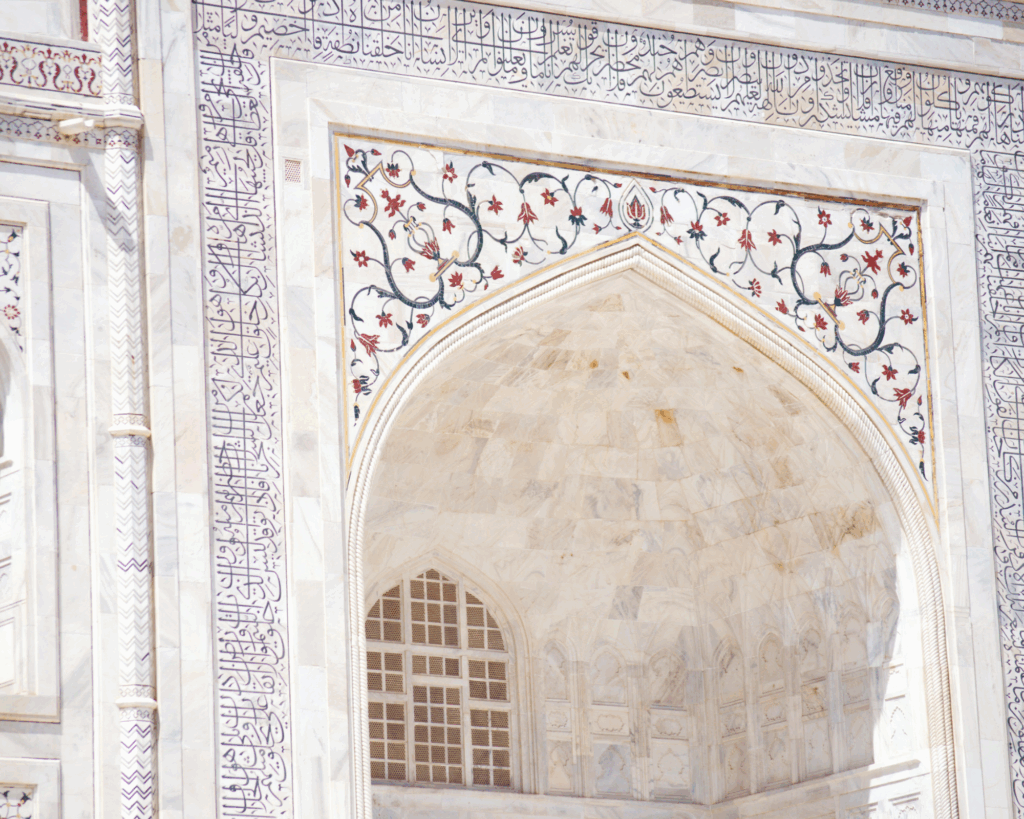
The stone panels are inlaid with semiprecious stones so perfectly that the joins are almost invisible. We were told that the artisans even applied the golden ratio to ensure that each pattern seemed harmonious on a subconscious level.
…I strolled by the reflecting pools and through the manicured gardens. Every path, every channel, and fountain were so precisely crafted that everything around me seemed like a mysterious scene from another reality.
And the water here is no accident – it symbolizes life and eternity, and the reflecting pools reflect the mausoleum, as if doubling its beauty. They say that at night, when the moon shines over the dome, the marble appears almost transparent, creating an illusion… an illusion.
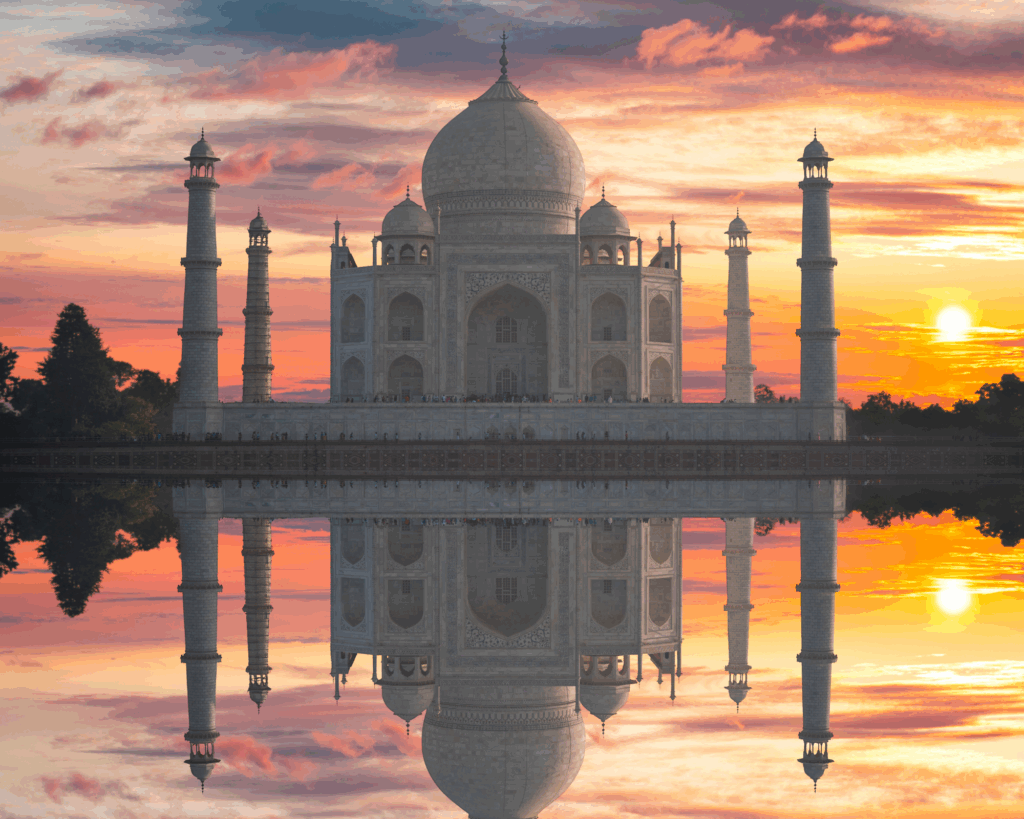
Inside the building, one senses a remarkable combination of beauty and engineering wisdom: ingenious ventilation ducts keep the building cool, and every detail is subservient to symmetry and harmony.
…Here I heard old stories about the craftsmen who, after completing the construction, were supposedly deprived of the opportunity to replicate this miracle anywhere else. Perhaps the legend is exaggerated, but it underscores the uniqueness of the Taj Mahal – a monument that cannot be replicated.
And, of course, it's impossible not to notice how Muslim motifs, thanks to the Taj Mahal, have permeated modern India. Domes, arched entrances, decorative facades of modern buildings, patterns on fabrics and carpets—all reflect the aesthetics of this remarkable mausoleum. Even everyday objects and hotel interiors embody its spirit of harmony and grace. In literature and film, the mausoleum has become the embodiment of love, devotion, and cultural heritage.
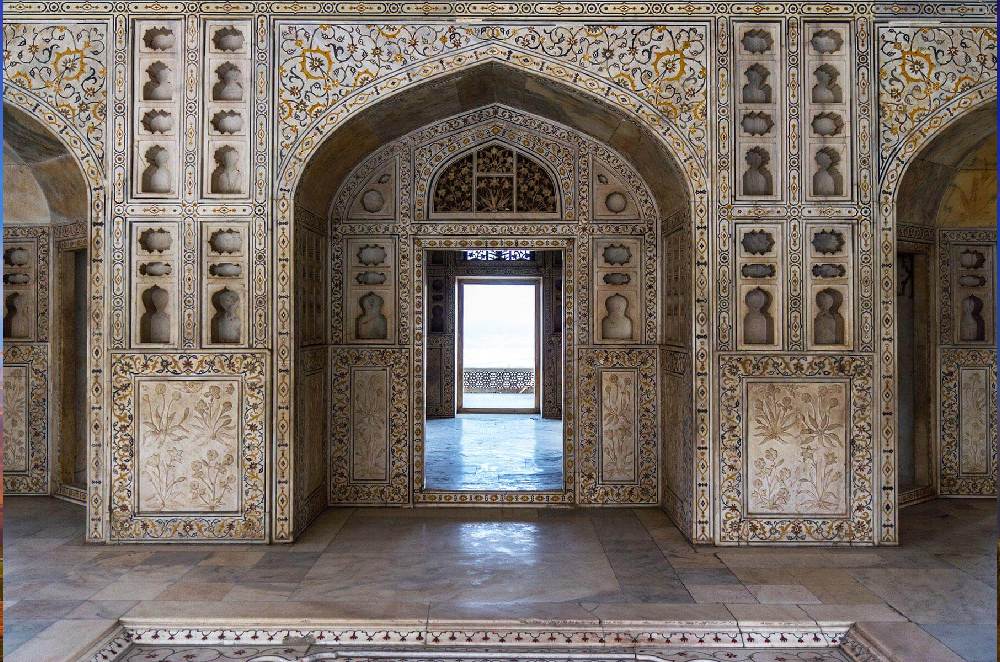
...I stood in the gardens, gazing at the reflection of the dome, and understood: human devotion, high art, and refined engineering come together here. And when you look at this human-made miracle, you begin to understand: it is precisely these details that make the Taj Mahal not only a symbol of all that is beautiful, but also a masterpiece of world heritage.
The Taj Mahal is more than just a mausoleum. It is a living symphony of stone, light, water, and craftsmanship that transcends the ages. Walking along the paths and gazing at the details, I sensed why the beauty laid here four hundred years ago continues to inspire generations and shape the unique image of modern India.
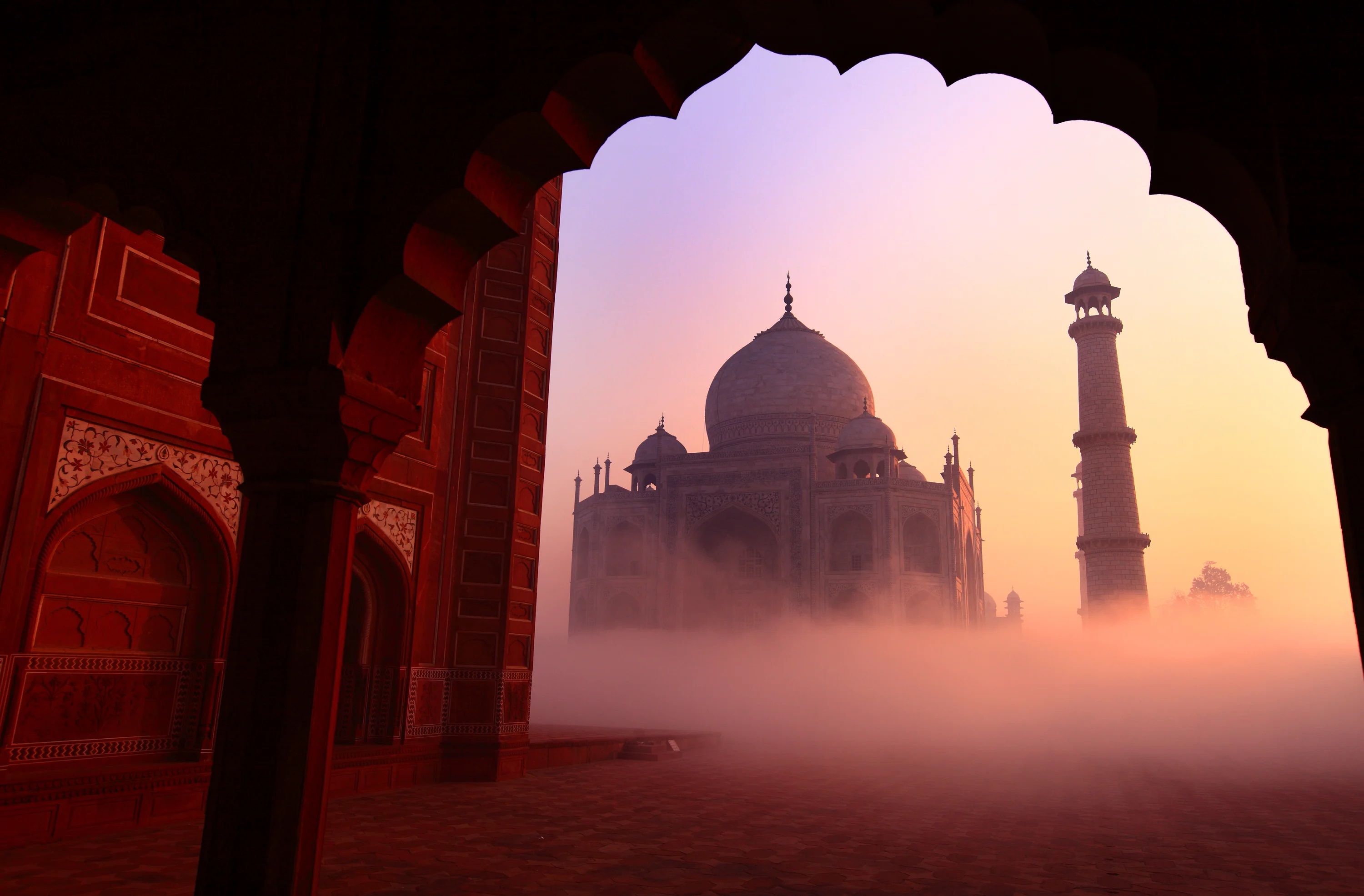
The Taj Mahal lives not only as a monument to the Mughal era, but also in every detail of modern India—from architectural ensembles and the art of craftsmen to literary and cultural images. It reminds us that craftsmanship and aesthetics can endure through the ages, influencing new generations and shaping a unique synthesis of cultural traditions.
Indeed, India is a spiritual space where the past meets the present and reaches into the future.
Enejan KEPBANOVA