||





Solfeggio is often considered one of the most rigorous and challenging disciplines. However, an open lesson by top-category teacher Larisa Amanova at the Danatar Ovezov Special Music School of the Turkmen National Conservatory proved that theoretical lessons can transform into an exciting creative process. Young musicologist Jennet Orazova explains how future professionals tune their "instruments of the soul" in her article for ORIENT.
More than Just Notes
The lesson with fourth-year students in the "String Instruments" department was structured like a coherent musical composition. From the very first minute, Larisa Nadyrovna engaged the future violinists and cellists in an active process. The main goal was not simply to sing notes, but to develop a comprehensive ear.
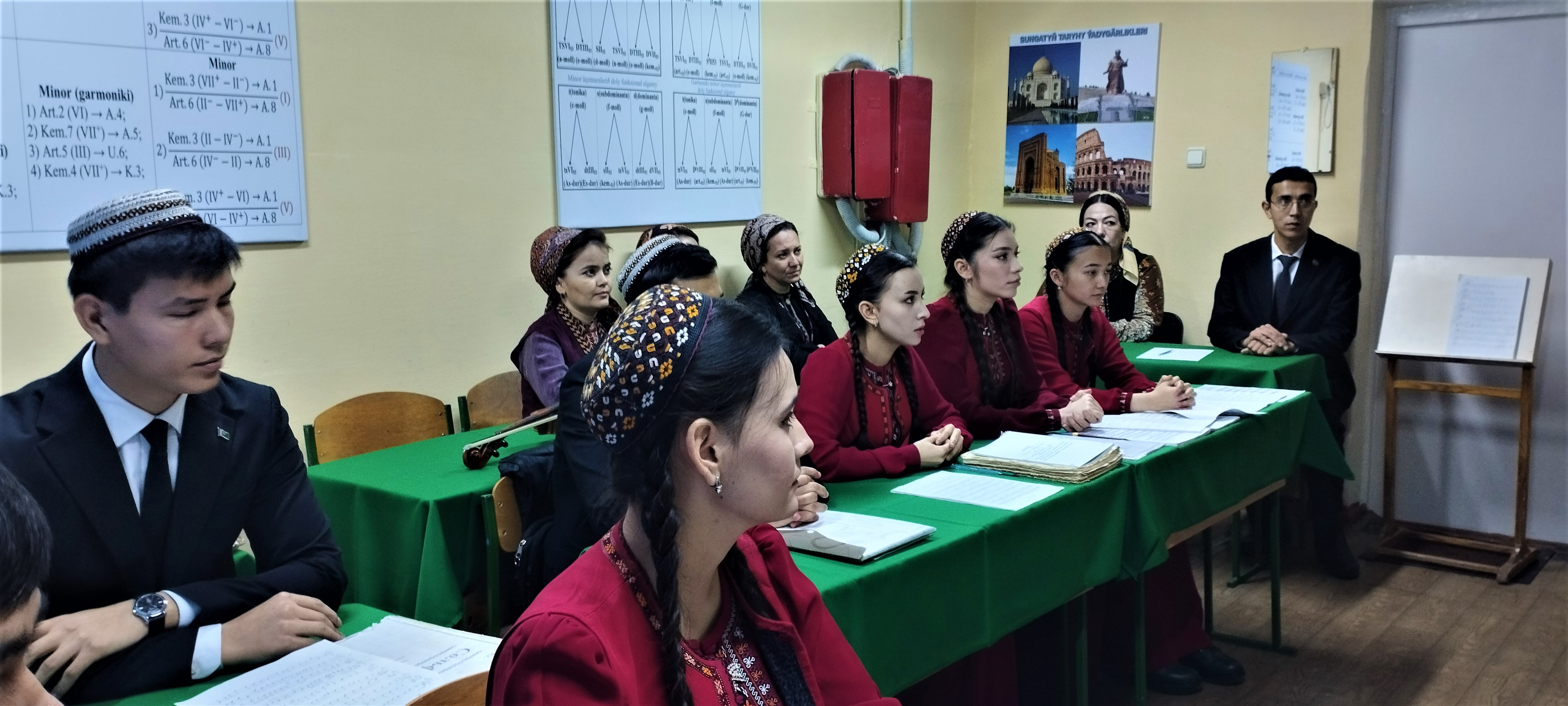
Methodological Secret: Technique vs. Image
One of the most valuable discoveries of the lesson was Amanova's original system of auditory analysis. The teacher suggests dividing this process into two levels: technical—instant recognition of musical language elements (intervals, chords)—and general—developing a holistic artistic image of a work.
This "two-layer" work allows students not just to mechanically guess sounds, but to understand the composer's logic.
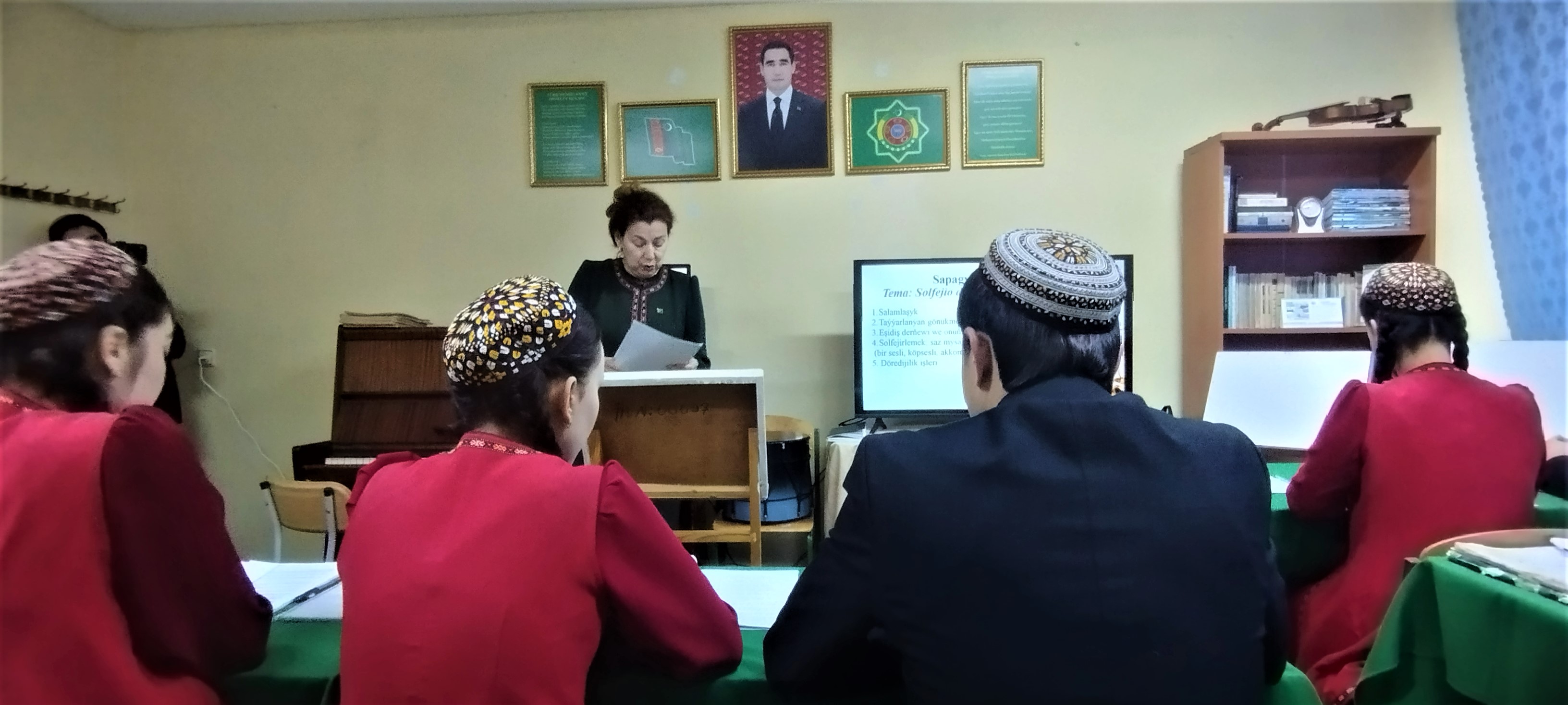
Violin, Voice, and Rhythm
The highlight of the lesson was the creative block. The future artists demonstrated incredible coordination: they simultaneously sang complex parts and accompanied themselves on their main instrument. Completing the assignments to the precise, pulsating rhythm of the drums added drive to the lesson and emphasized the importance of a steely sense of rhythm for a solo career.
For the young professionals, this lesson was a revelation. Larisa Nadyrovna clearly demonstrated how to structure the most complex topics. The method of dividing analysis and the use of percussion instruments are ideas that will find application in their teaching practice.
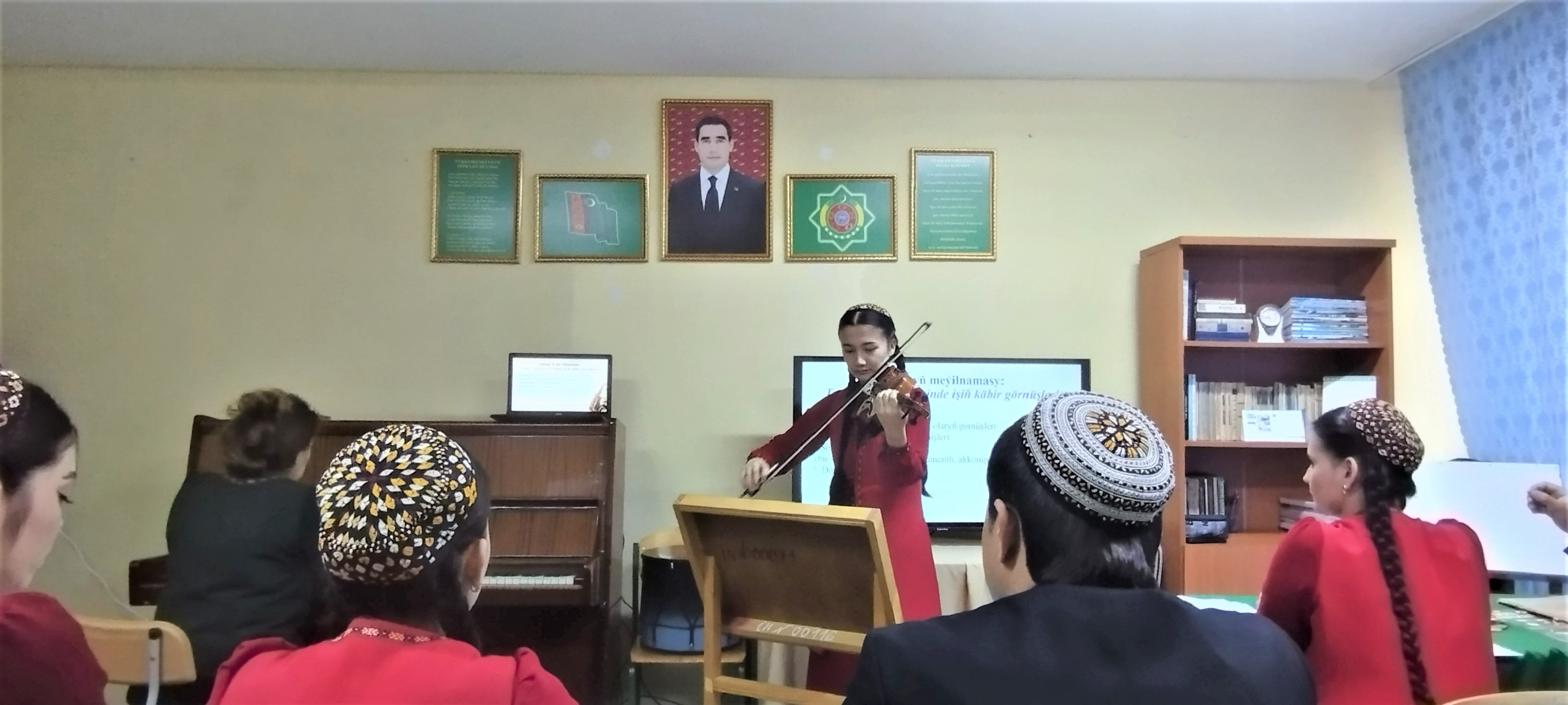
Such meetings between generations—experienced masters and young successors—are the foundation on which the Turkmen music school rests. Larisa Amanova's experience demonstrates that classical education remains vibrant as long as it allows for experimentation and a sincere love of art.