||
Korean consumer goods, from cosmetics (K-Beauty) to fashion and home goods, are experiencing a rapid rise in Central Asia. Thanks to the widespread dissemination of "Korean Wave" content, the C5 region (Kazakhstan, Kyrgyzstan, Tajikistan, Turkmenistan, and Uzbekistan) has emerged as a new strategic market for Korean brands.
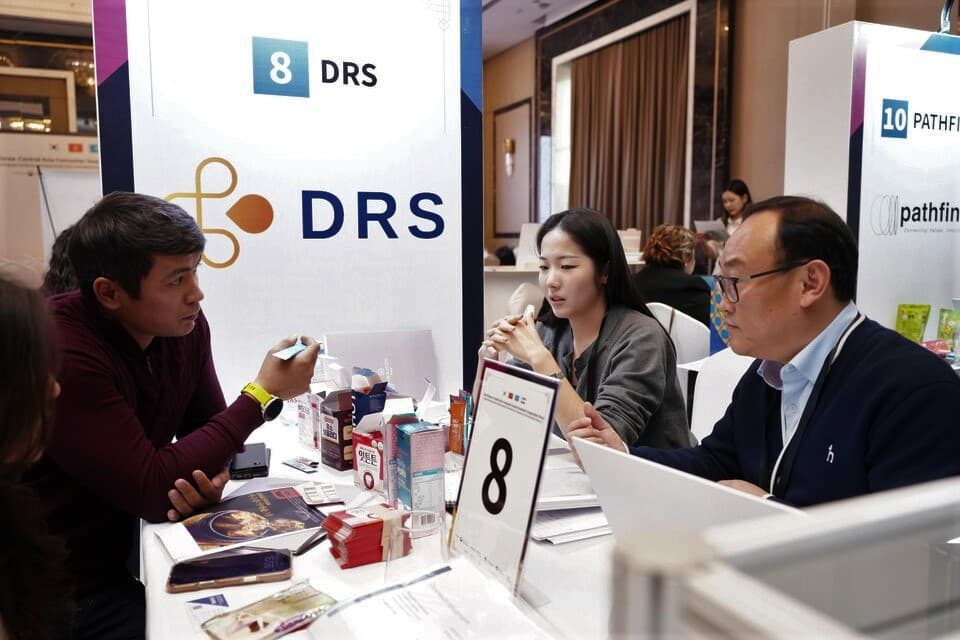
The official launch of full-scale economic cooperation was given on December 4-5 in Bishkek, Kyrgyzstan, where KOTRA (Korea Trade-Investment Promotion Agency) and the Korean Ministry of Commerce held the "Korea-Central Asia Consumer Goods Economic Cooperation Square," according to SME Today (sbiztoday.kr), a respected Korean business and trade publication.
This event marked Korea's transition to systematic expansion across the entire C5 region. KOTRA assesses Central Asia as a "promising new market in the global South," where high income growth (C5 countries' GDP is growing at 3-9% per year) is accompanied by growing demand for Korean-made goods.
For example, in Kyrgyzstan, Korean cosmetics have already become one of the top five import items as of 2024, and total imports from Korea have grown by an impressive 379% over the past three years.
Active consultations with local players and B2B consultations were held within the framework of the "Economic Cooperation Square": 20 Korean companies held 106 individual meetings with local buyers. The largest wholesale market operator in Central Asia, the Dordoi Association, expressed its willingness to cooperate, which is moving distribution and logistics plans into the development phase of a concrete network.
Going forward, KOTRA plans to use Kyrgyzstan as a base for strengthening partnerships with neighboring countries, including Turkmenistan, and to develop a C5+1 economic cooperation project focused on K-Consumer consumer goods (an acronym for Korean Consumer Goods, a marketing term that refers to a collection of South Korean consumer goods that have gained popularity in the global market).
ORIENT




 Chinese New Year