



A native of Turkmenistan, cosmonaut Oleg Kononenko, together with colleagues from the crew of the forthcoming ISS-69 expedition - Nikolai Chub and Loral O'Hara - underwent training to work with the Soyuz MS spacecraft. The four-hour test "covered" all stages and modes of space flight, as well as a series of emergency situations.
According to the program, it was planned to work out pre-launch preparation and launch a manned spacecraft into orbit. The crew was supposed to “perform” a flight to the International Space Station according to a two-turn (three-hour) scheme with a transition to an urgent descent.
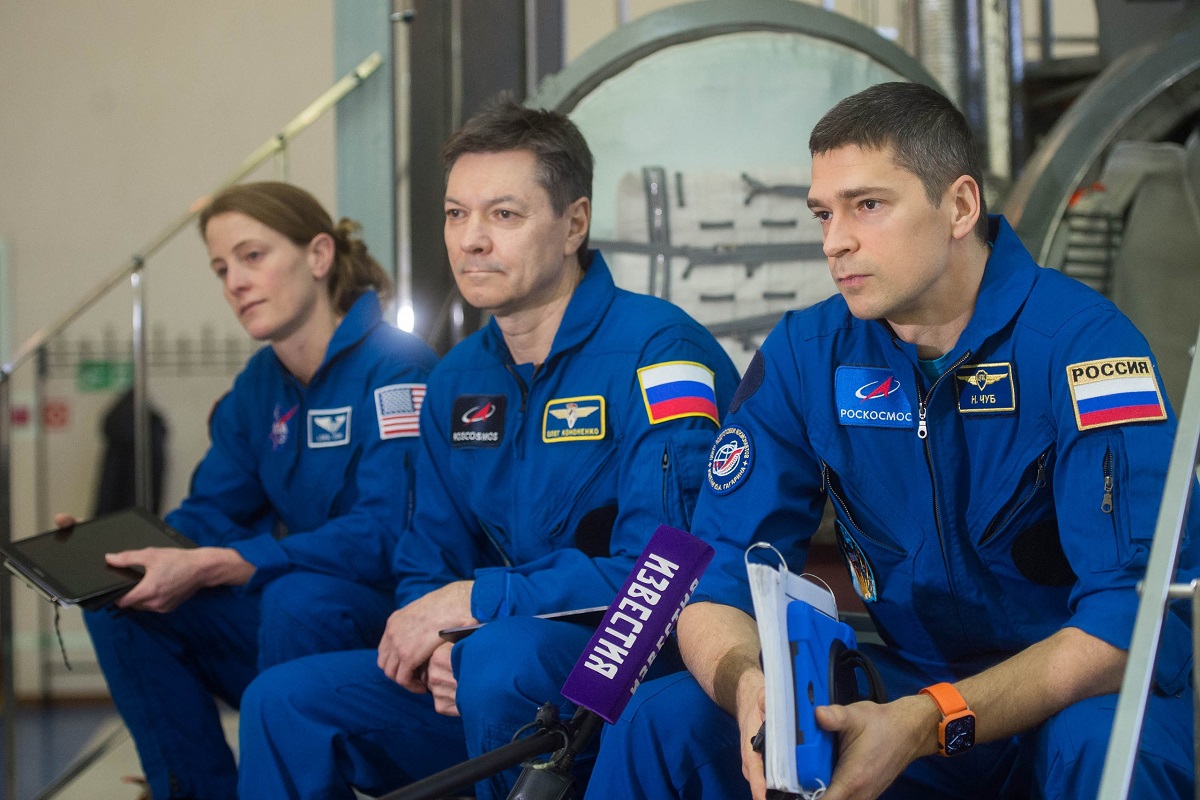
“Already during the pre-launch preparation stage, the instructors “introduced” several emergency situations, among which were: the failure of the main radio communication transmitter, the failure of the automatic separation of the TLC from the launch vehicle, as a result of which the astronauts decided to switch to manual control mode,” the Cosmonaut Training Center reported.
When the crew coped with the problems, they were given the task of controlling the systems of the manned spacecraft. At the stage of checking the tightness of the compartments, they encountered a depressurization of the descent vehicle. The crew decided to go on an urgent descent with a landing on the second orbit. At this stage of the flight, the training program also included a list of emergency situations, such as brake engine failure and transition to manual control, manual controlled descent, and many others.
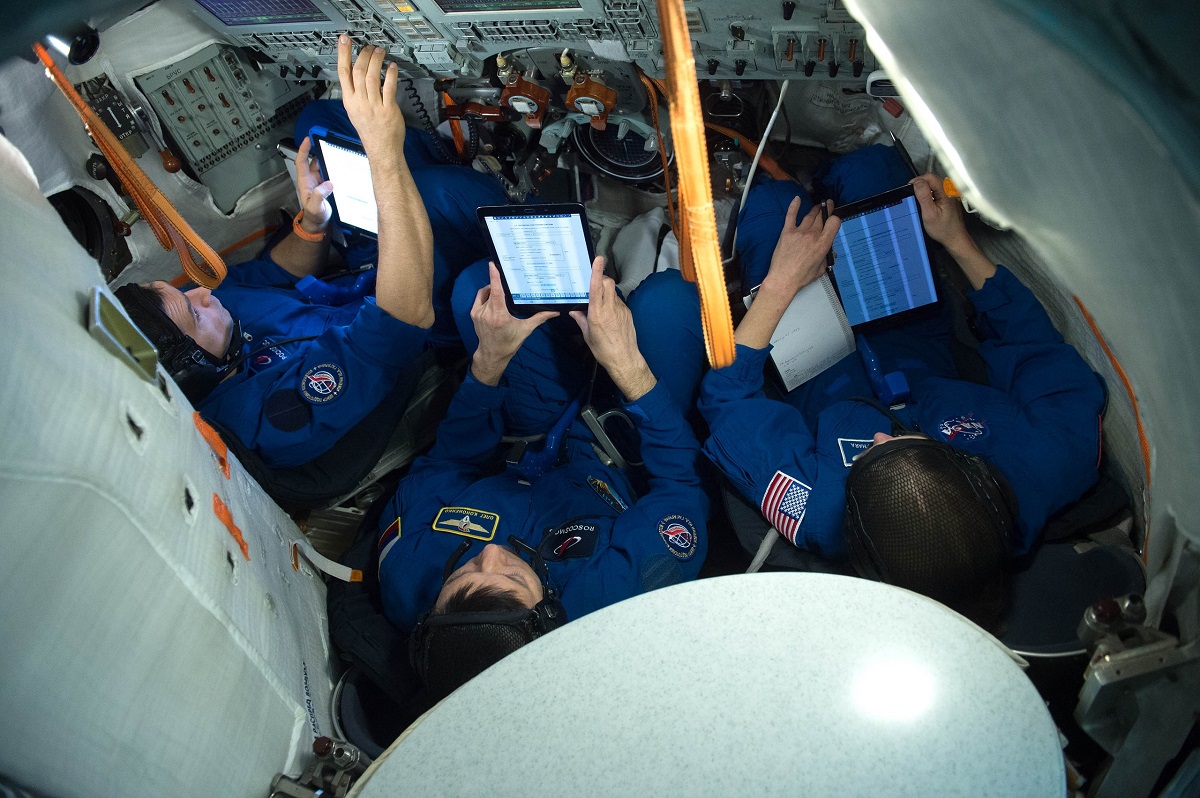
According to the results of the lesson, the prime crew of Expedition 69 to the ISS successfully coped with all the "contingencies", worked out the actions of a controlled flight in accordance with the onboard documentation and received a high rating from the instructors.
The next day, the astronauts had to deal with several more emergency situations. Among them are the failure of the station's life support systems and communication facilities, the malfunction of the onboard computer, the failure of automatic berthing or docking systems, and many others.
Oleg Kononenko and Nikolai Chub completed the tasks of training for the automatic docking of a transport cargo ship with the International Space Station. The program of the four-hour lesson was devoted to developing the skills to control the station's systems during a regular docking, which does not imply emergency situations.

“Today we worked the day on which we receive the Progress cargo ship. We completed all the necessary procedures: we prepared the station, the docking segment and system, and the mechanisms for receiving ships. And after it “docked”, we continued to work out various operations, such as checking the tightness, equalizing pressure, opening hatches,” crew commander Oleg Kononenko said.
When the transport cargo ship approaches the station, the crew, according to the on-board documentation and radiograms, gets to work. The cosmonauts ensure the preparation of communications and the console for emergency situations, and also proceed to an equally important task: monitoring the docking process both visually (using cameras) and according to the data displayed on the laptop.
The lesson, as well as the real process of docking control, takes place in the main Service Module (SM), where the workplace with teleoperator control mode is located. The crew commander is as close as possible to the equipment in order to quickly eliminate the malfunction or accident together with the flight engineer.
Leonid Kiyashko, ORIENT special correspondent, member of the Guild of Interethnic Journalism of Russia, Ivanovo
