||
Deep space delivered triumphant news to the global scientific community. NASA's interplanetary probe Psyche successfully executed a complex gravity assist maneuver in the vicinity of Mars, using the Red Planet's gravity as a gigantic cosmic slingshot. Flying at high speed within a few thousand kilometers of the Martian surface, the spacecraft instantly changed trajectory and received the powerful ballistic impulse needed for its final acceleration. This success puts the mission on track to enter orbit around its primary, unprecedented target—the mysterious metallic asteroid 16 Psyche, located in the outer part of the main asteroid belt between Mars and Jupiter.
The uniqueness of this mission, which is being closely monitored by astrophysicists worldwide, lies in the very nature of the target celestial body. Unlike most known asteroids, which are composed of rock, ice, or clay, 16 Psyche is the colossal, exposed metallic core of an ancient protoplanet that died at the dawn of the solar system. Observations show that this gigantic object is composed almost entirely of iron, nickel, and precious metals, including platinum and gold.
According to leading global economists and geologists, the total value of this celestial body's resources exceeds an astronomical ten quintillion dollars, which could theoretically instantly collapse the entire Earth economy. However, for scientists, the object is valuable primarily as a unique opportunity to peer into the very heart of the terrestrial planets, inaccessible to direct study on Earth.
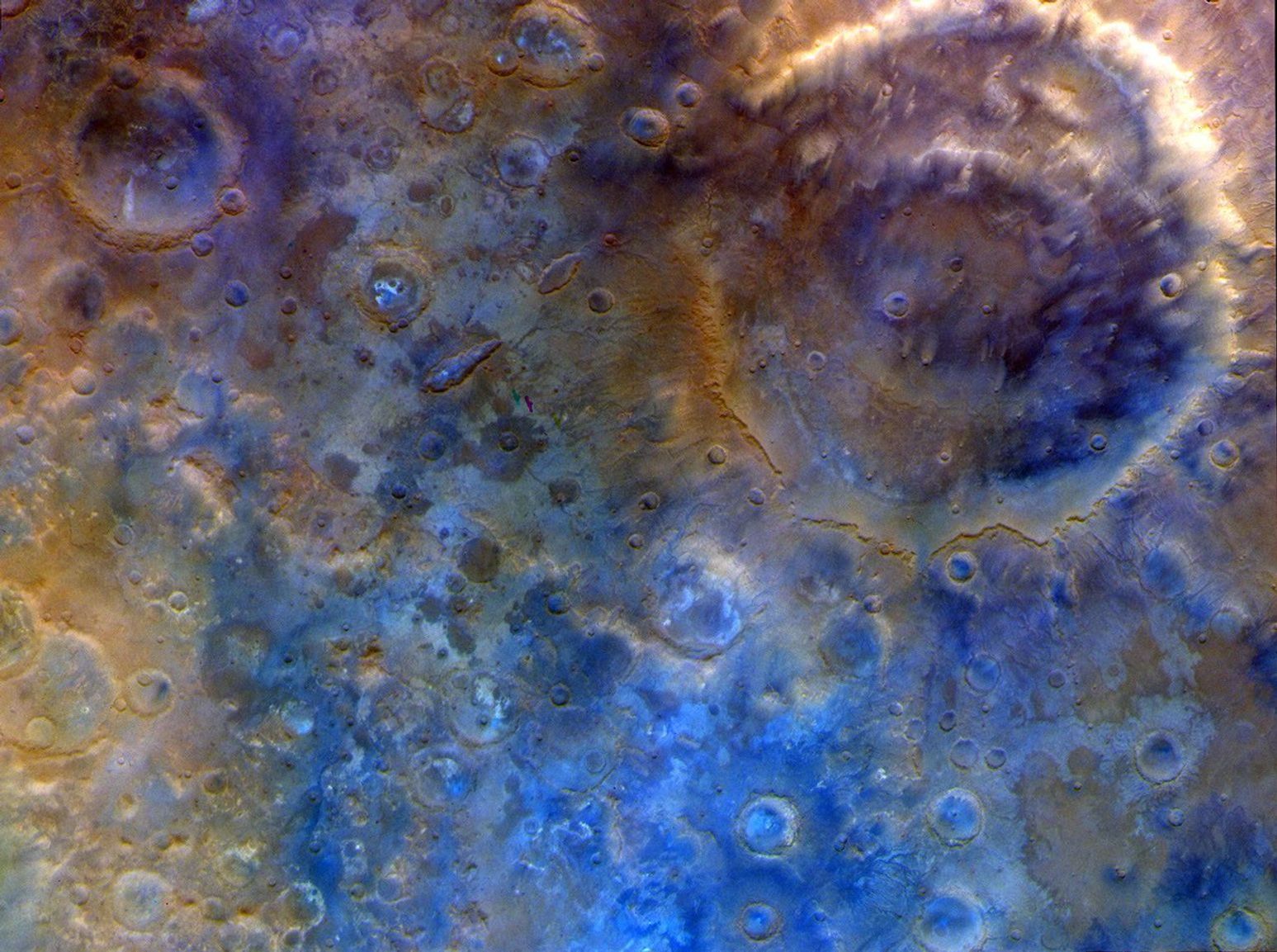
Passing the gravitational threshold of Mars marked the critical point of the entire expedition, launched in the fall of 2023. During the flyby, mission controllers not only adjusted the course but also conducted extensive testing of the innovative Hall-effect ion thrusters and verified the ultra-long-range laser communications system.
Now, Psyche, accelerated at an unprecedented speed by Martian gravity, is heading into deep space. According to ballistics calculations, the spacecraft will reach the metallic giant's orbit by 2029, after which it will begin months of detailed mapping of the surface, which will help humanity uncover the secrets of the origins of planetary cores and take the first practical steps toward a future industrial era of space mining.