We are guided by what unites people




News
Articles
Media
Announcement
Technology
About Us
Contacts
Thursday, May 28, marked exactly three months since the start of hostilities in the Persian Gulf region, which had an extremely negative impact on the global economy, affecting the energy sector, logistics, financial markets, a wide range of industries, food security, and more.
However, with great regret, we must note that, in addition to all of this, cultural and historical sites in Iran that had been preserved for centuries and millennia were damaged.
Great civilizations have emerged, flourished, and eventually declined on the land of present-day Iran since ancient times. One of these was the Elamite civilization, which emerged in the 4th–3rd millennia BC. Even then, the Elamites were able to organize a complex society with a developed writing system, architecture, and art. They also became famous for their temples, ceramics, and bronze artifacts.
In the first millennium BC, the Median civilization flourished in the same region, in what is now Iran. It reached its peak in the seventh century BC. Median culture was rich and diverse, with highly developed skills in metallurgy and agriculture. The Medes also contributed to the formation of the foundations of one of the world's first religions, Zoroastrianism.
The Achaemenid Empire, founded by Cyrus II in 550 BC, also deserves mention. It was one of the greatest empires of the ancient world and lasted for over two centuries, encompassing vast territories, including Iraq, Syria, Egypt, and parts of India. The empire was renowned for its centralization, a system of vast satrapies governed by viceroys, high-quality roads, and a postal service.
And in the modern era – from the 3rd to the 7th centuries – the Sasanian Empire reached its zenith in these parts.
This and other civilizations, leaving a rich legacy to their descendants, made a significant contribution to the development of world culture. Just as world civilization influenced Persian culture, so too did this.
...While scanning the world news daily, amid the rapid flow of information about military clashes, a seemingly unexpected report caught my attention, which we later posted on the ORIENT website. The article reported that a symphony orchestra concert had taken place in downtown Tehran.
Despite the current situation in the Persian Gulf, the 800-seat hall was filled to capacity. Those gathered were treated to the artistry of the musicians performing the greatest masterpieces of world classical music – works by Pyotr Ilyich Tchaikovsky and Ludwig van Beethoven.
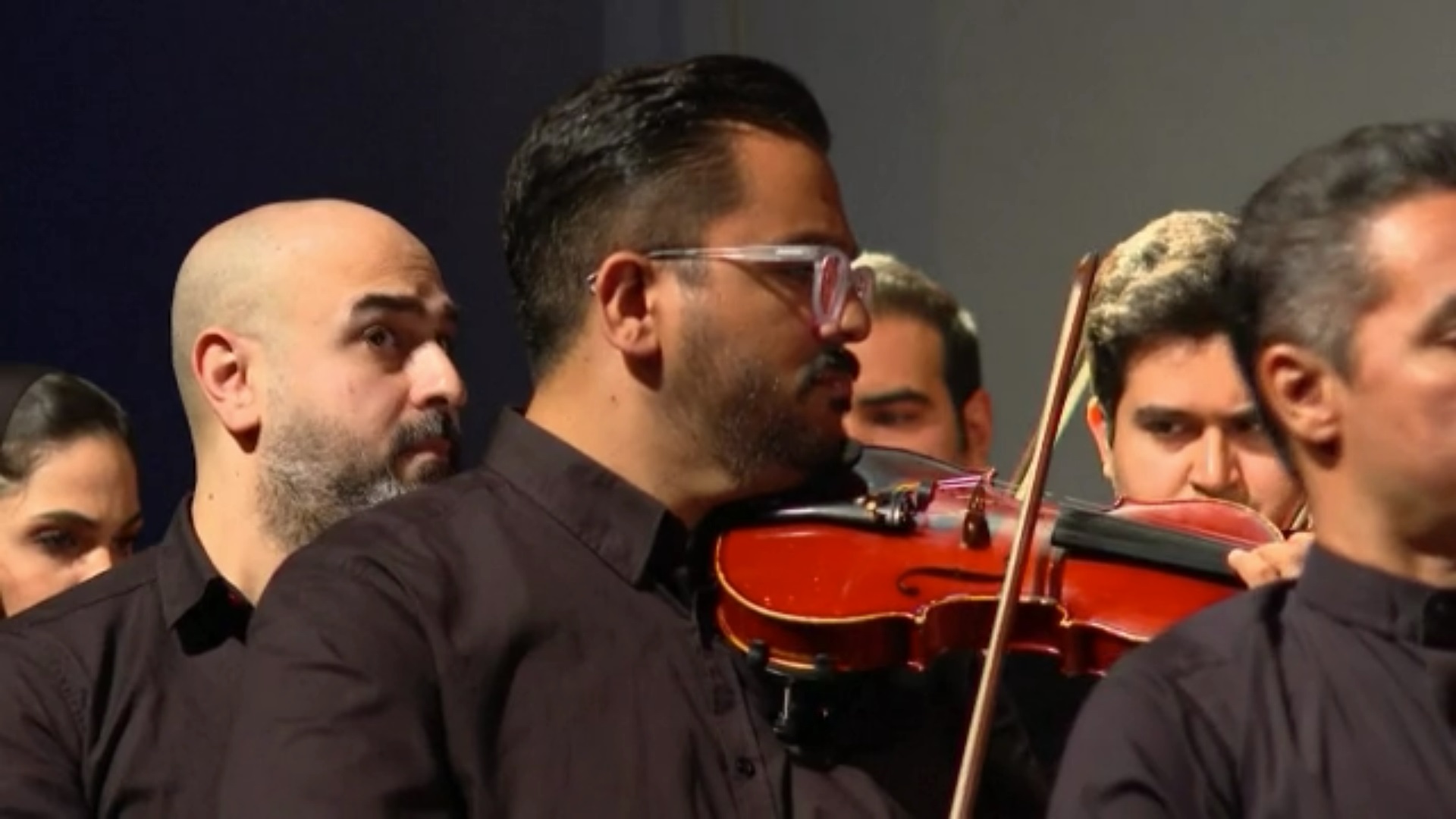
The audience themselves, in interviews with the media, noted that the evening restored their faith in the future. One attendee emphasized that the music reminded everyone present that, despite the upheavals and explosions outside, life remains beautiful, and culture cannot be destroyed by bombs and missiles.
As I read about this, the legend of Shukur-Bakhshi immediately came to mind – a musician who, with his art, was able to achieve more than an entire army. In one of his books, National Leader of the Turkmen People Gurbanguly Berdimuhamedov cited the film "Competition," made on this topic, as an example of how a bakhshi musician, through the power of his talent, prevented bloodshed.
I also recalled Shostakovich's immortal Seventh Symphony, performed in besieged Leningrad. This is another example of how art can become a spiritual weapon against war. Assembling an orchestra during the siege was already a feat. Musicians were sought throughout the city and even recalled from the front lines. Many were exhausted by hunger, wounds, and illness.
But, despite everything, the concert took place. The symphony was broadcast on the radio and through loudspeakers throughout Leningrad. The music instilled hope in the residents of the besieged city. It helped overcome despair, becoming a testimony that the city was alive and continued to fight.
And another memorable concert, known in history as "With a Prayer for Palmyra," took place ten years ago, in May 2016. The Mariinsky Theatre Symphony Orchestra, conducted by Valery Gergiev, performed in the ancient Roman amphitheater of Palmyra, liberated from terrorists.
World-renowned musicians, as a rule, aren't always physically fit. They're more accustomed to performing in renowned concert halls, staying in the finest hotels while on tour, giving interviews to journalists, and signing autographs for fans. But in Palmyra, they faced the heat of the Syrian desert, performing under the scorching sun, and all manner of inconveniences. Furthermore, militants were lurking just a few kilometers from the city.
Despite this, the bohemian musicians, pampered by the attention of a sophisticated audience, unhesitatingly agreed to travel to the ruined city to prove with their performance that life will go on as long as there's room for true art.
Gergiev himself noted at the time that the music performed in Palmyra was "emotional pain, indignation, a protest against barbarity and violence, against the inhumane people who were destroying priceless monuments of world culture." Valery Abisalovich also emphasized that the Palmyra Concert is a call for peace!
And so, on May 21, the Tehran Symphony Orchestra performed in the bombed-out city. This performance became a galvanizing sign of hope, resilience, and the belief that art is stronger than destruction. Spectators and officials noted that a full hall for classical music during a time of geopolitical upheaval was a direct statement that culture cannot be destroyed even by the most modern weapons.
Deputy Minister of Culture Mehdi Shafiei emphasized that during times of crisis and war, art serves as a tool for strengthening resilience, hope, and social cohesion.
News agencies such as the Associated Press, Reuters, and Anadolu, among others, saw this event as an "awakening" of the Tehran music scene. Journalists noted that the packed hall, where works by Tchaikovsky and Beethoven were performed, was a conscious public declaration that "Art does not go underground, even during war."
War speaks in the language of guns, and Peace in the language of music. And sometimes the quiet voice of art is louder than the clash of swords.
...Pyotr Ilyich Tchaikovsky is one of those rare composers whose music is equally appreciated in snowy Stockholm and perpetually hot Cairo, in far-west New York and in the east, where the sun is first seen – Tokyo.
Earlier this year – on January 7, 9, and 10 – the New York Philharmonic performed Tchaikovsky's First Concerto three times. The piano part was performed by the outstanding Uzbek pianist Bekhzod Abduraimov, whom art historians call "the most accomplished pianist of his generation."
…As for my first impressions of Tchaikovsky's music, they date back to my early childhood, when I couldn't read or write. Back then, the internet hadn't been invented yet (my peers and I had a happy childhood), and television didn't have the abundance of channels we have today, drowning in a raging sea of information. People were simple-minded and enjoyed simple human interaction.
But I listened to Tchaikovsky's First Concerto with fascination. From the very first bars, my childish imagination was inspired by the magical tone of the French horn, reminiscent of an ancient hunting horn. It seemed as if the trumpet-like sound of this instrument was descending upon me from the heavens. The inviting sounds of the French horn repeated three times, followed by radiant, life-affirming piano chords!
Every time I listened to this record, a surge of excitement took my breath away. And these emotions were so tenaciously wedged into my childhood consciousness that even now, when I hear the opening movement of Tchaikovsky’s First Concerto, I experience the same sensations, hidden somewhere in the depths of my brain cells, which incomprehensibly return me to the distant past.
It was then that my father told me, a five-year-old boy, that the record featured Tchaikovsky's famous First Concerto performed by the American pianist Van Cliburn, who had captivated Soviet music lovers with his virtuoso performances of the composer's works.
The recording of that concert, made in 1958, became the first classical album in history to achieve platinum status. It was this recording that earned Van Cliburn a Grammy Award in 1959.
A little later, as I grew older, I learned of the difficulties in relations between the Soviet Union and the United States. But these difficulties didn't prevent the American musician, despite considerable difficulties, from coming to Moscow to participate in the International Tchaikovsky Competition, which was being held for the first time.
An unprecedented and very dramatic incident occurred during Van Cliburn's performance. A string on the piano he was playing snapped! The Soviet audience held their breath, but the American pianist continued to play with abandon. And, after all the rounds, he became the winner of the 1st International Tchaikovsky Competition!
Enthusiastic applause, thousands of flowers, and genuine love accompanied every meeting the American musician had with him in Moscow. Later, inquisitive journalists noticed Van Cliburn's bandaged finger, to which he dismissed it, saying, "It's nothing." Back in his homeland, the United States, the musician was greeted as a hero. A celebratory parade was even organized in Manhattan.
Thus, despite the powerful ideological indoctrination practiced both in the West and the Eastern Bloc, Van Cliburn's sincere love for Tchaikovsky's music and Russian culture in general (he called himself "the owner of a Russian heart") temporarily thawed the ice of disagreement among ordinary people living not only in different countries but also in irreconcilably hostile systems.
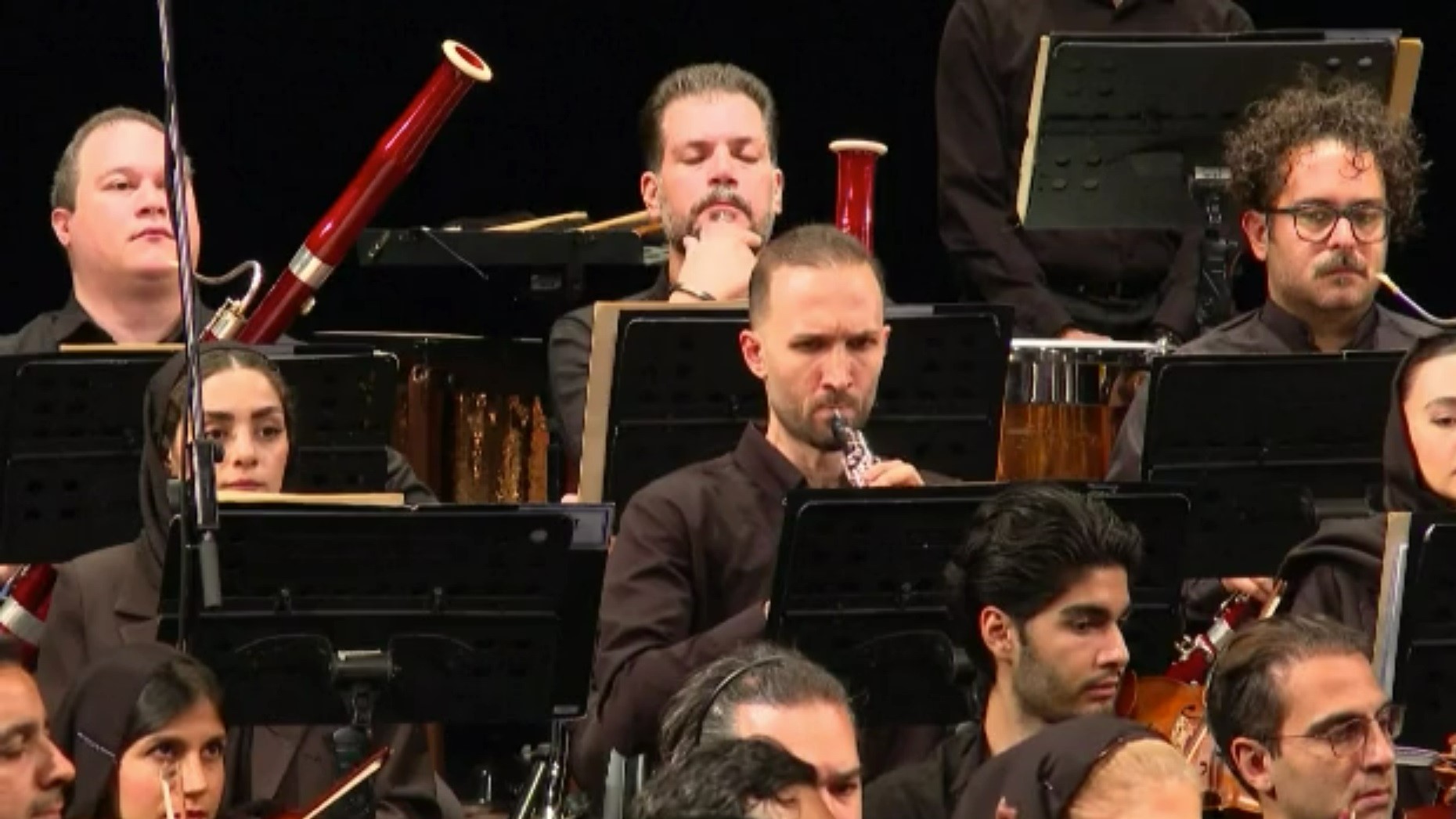
...Decades pass, eras and conflicts change, but true art remains unchanged. And the May melodies of Tchaikovsky and Beethoven in a packed hall in Tehran are the best proof of this – as long as music plays, hope for peace lives.
Bekdurdy AMANSARYEV
